
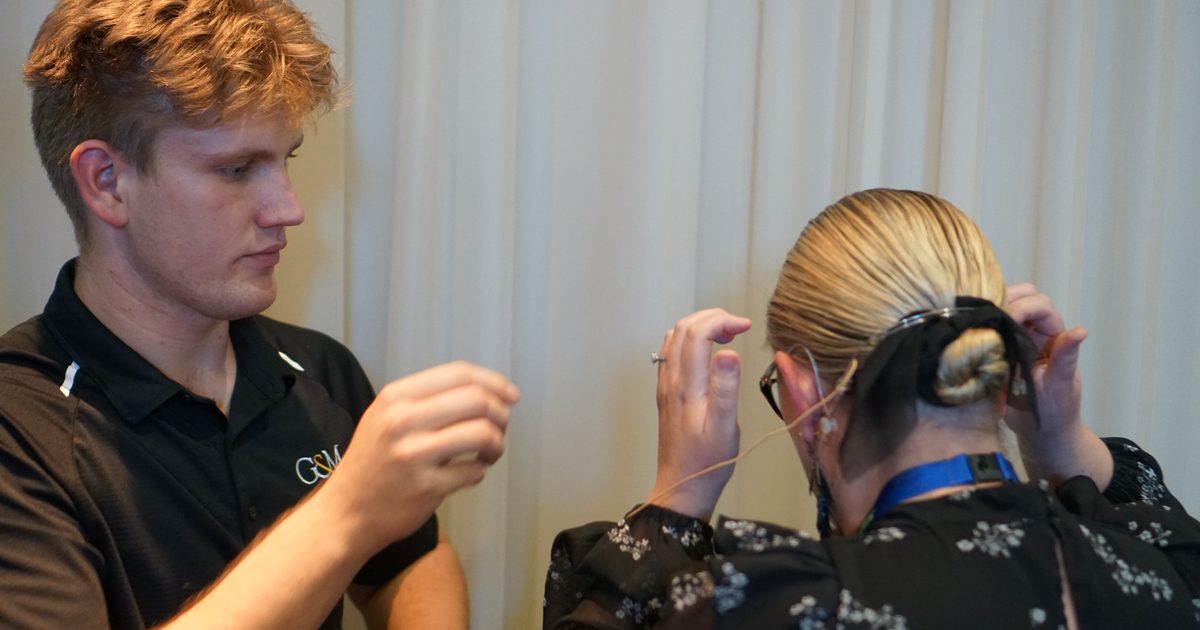
Most mic selection problems at corporate events start the same way: someone picks a microphone type based on what they have seen before, rather than how the presenter actually behaves on stage. A lapel goes on a gesturer who knocks it with their hand every minute. A lectern mic is set up for a presenter who likes to walk while they speak. A handheld lands with someone who needs both hands free for slides and props.
Four mic types cover almost every corporate event: handheld, lapel (sometimes called lavalier), headset and lectern. Each is good at a specific job and wrong for others. This is a practical comparison of the four, with guidance on matching the mic to how your presenter actually presents.
Key takeaways
- Mic selection is about presenter behaviour, not personal preference. Match the mic to how the presenter actually moves and gestures on stage.
- Handheld: versatile, audience-familiar, ideal for Q&A. Occupies one hand.
- Lapel: hands-free, less visible, ideal for keynote presenters. Placement is critical and clothing-dependent.
- Headset: secure and consistent, ideal for energetic and moving presenters. The most visible of the hands-free options.
- Lectern: simple, hands-free, ideal for formal addresses. Ties the presenter to one spot.
Match the mic to the presenter, not the other way around
Before any of the specific mic types, the single most useful framing: the mic you choose should fit how the presenter actually behaves on stage, not the equipment you happen to have available or the type the presenter is most familiar with. A confident speaker who gestures with both hands needs a lapel or a headset, regardless of whether they prefer a handheld. A formal speaker who reads carefully from notes is fine on a lectern mic. A high-energy host who moves the length of the stage needs a headset, not a lapel that will pick up clothing noise as they move.
Almost every common mic problem at events traces back to this. The right mic is the one that matches the speaking style.
Quick comparison. Detailed descriptions of each follow below.
| Mic type | Best for | Pros | Cons |
|---|---|---|---|
| Handheld | Q&A, panels, audience interaction, lectern-bound presenters who don't move much | Versatile, familiar, reliable, easy to pass around the audience | Occupies one hand, more visible |
| Lapel | Keynote speakers who gesture and move, presenters who need both hands free | Hands-free, less visible, comfortable for most presenters | Picks up clothing noise, placement is critical, wardrobe-dependent |
| Headset | Energetic presentations, performers, high-movement speakers | Secure placement, consistent pickup, no wardrobe constraints | More visible, can feel intrusive for some speakers |
| Lectern | Formal readings, structured addresses, lectern-bound presenters | Simple, no fitting required, hands-free | Ties presenter to the lectern, pickup drops if they move away |
The four main mic types
Each described in the same format below so they can be compared directly.
Handheld
What it is: A microphone held in the presenter's hand, the familiar shape audiences recognise from interviews and stage performances. Available wired or wireless; at corporate events, almost always wireless.

Pros: Versatile, reliable, audience-familiar. Easy to pass around for Q&A. The presenter has full control of mic positioning, which helps experienced speakers.
Cons: Occupies one hand. More visible than a lapel. Less appropriate for presenters who gesture energetically with both hands.
Best for: Q&A sessions (passing between audience members), panel discussions, MCs and hosts, lectern-bound presenters who want flexibility to step away, and audience interaction segments.
Lapel (also called lavalier)
What it is: A small clip-on microphone attached to the presenter's clothing, typically near the collar or lapel, connected to a wireless transmitter (a small pack that sends the signal to the sound desk) clipped to a belt or pocket. "Lavalier" and "lapel" mean the same thing; both terms are used.
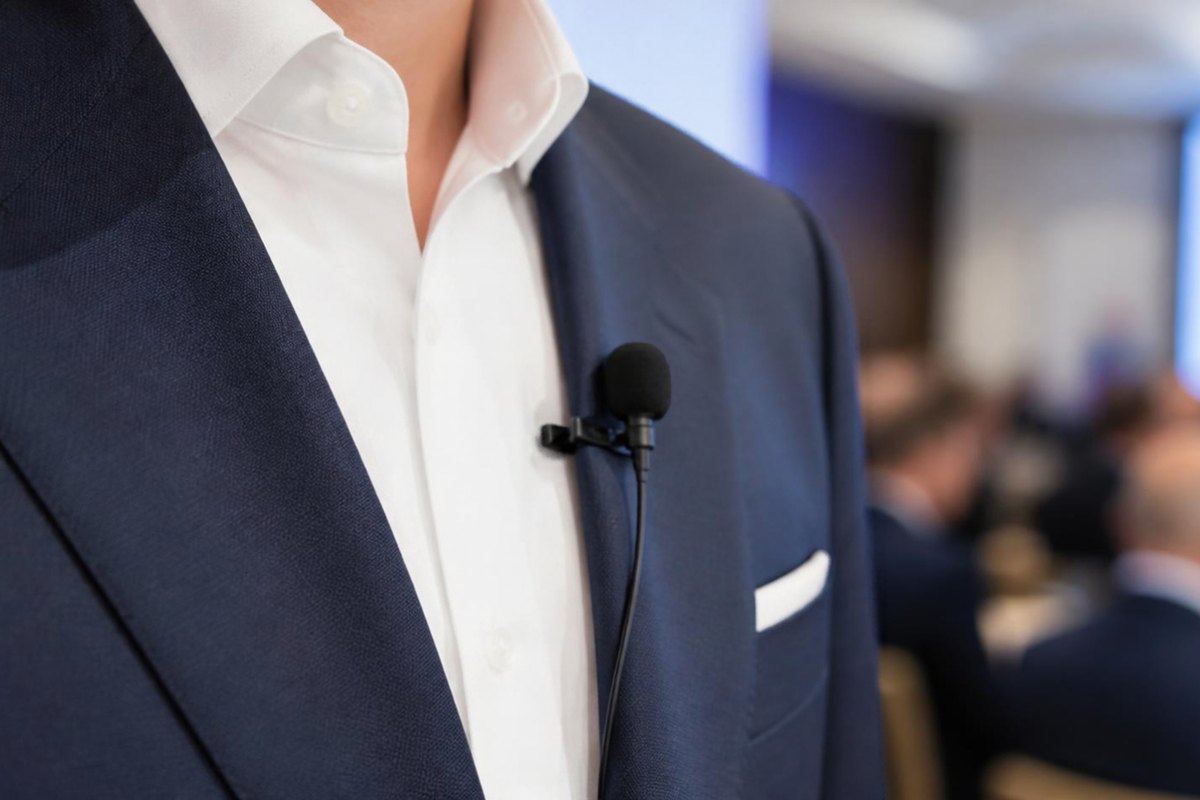
Pros: Hands-free. Less visible to the audience than a handheld or headset. Comfortable for most presenters once fitted properly. Allows natural movement and gesture.
Cons: Placement is critical. Can pick up clothing noise (rustle, jewellery, scarves brushing against the mic). Wardrobe-dependent: difficult to fit cleanly to high-neck garments, scarves, or jackets without a strong lapel.
Best for: Keynote speakers who gesture and move. Presenters who need both hands free for slides, props or written notes. Almost any formal corporate speaker whose clothing allows clean placement.
Headset
What it is: A microphone on a thin frame worn over one or both ears, with the capsule (the microphone head itself) positioned just below the corner of the mouth. Connected to a wireless transmitter on the body.
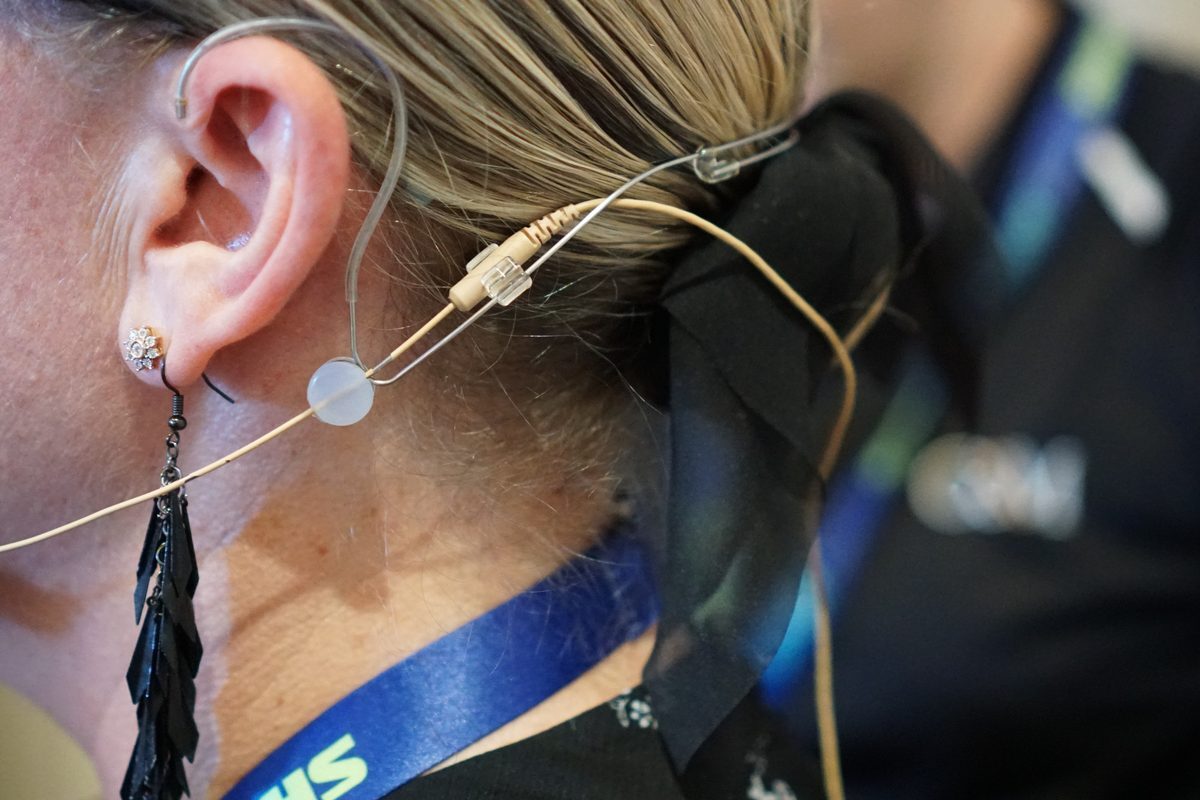
Pros: Most secure placement of any mic type. Consistent pickup (how cleanly the mic captures the voice) regardless of how the presenter moves their head or body. No wardrobe constraints. Ideal for energetic speakers who would knock or rustle a lapel.
Cons: Most visible mic type. Some speakers find them intrusive or feel self-conscious wearing one. Less suitable for formal corporate settings where the look matters.
Best for: Energetic presentations, fitness or performance contexts, MCs at high-energy events, anyone who moves a lot or speaks with significant head movement.
Lectern
What it is: A fixed microphone mounted on the lectern itself, on a gooseneck (a thin, bendable stem) or a short arm. Usually wired into the sound system. The simplest mic type to use.

Pros: Simple. No fitting, no wireless setup, no battery management. Hands-free in the sense that the presenter does not hold or wear it. Reliable and familiar.
Cons: Ties the presenter to the lectern. Pickup drops sharply if the presenter steps away or turns their head. Limits natural presentation style for any speaker who likes to move.
Best for: Formal readings, scripted addresses, ceremonial speeches, award announcements (where the presenter stays at the lectern between names), and any context where the presenter genuinely will not move.
Most events use more than one mic type
A common assumption is that a single event uses a single mic type. In practice, almost every corporate event of any scale uses two or three different types across the day:
- A conference might use headsets or lapels for keynote speakers (hands-free, allows movement), handhelds for Q&A (easy to pass between audience members), and a lectern mic for formal opening and closing remarks.
- An all-hands meeting might use headsets or lapels for executives (consistent professional look) and handhelds for the Q&A segment.
- A gala dinner might use a headset or lapel for the MC (who needs both hands free), handhelds for presenters coming up to speak (easy to pass), and lectern mics for formal speeches.
This is normal and worth planning for at the brief stage. Our conference production checklist shows when to lock in each speaker's mic. Treating the entire event with one mic type is usually a compromise.
"My speaker wants a handheld but needs both hands free"
This conflict is common, and the answer is usually that the speaker is asking for the wrong tool. A handheld is familiar and feels controllable, which is why many speakers default to requesting one. But a presenter who is gesturing, holding notes, advancing slides, or interacting with props needs hands free. A lapel solves the practical requirement; a headset solves it more securely if they move a lot.
The conversation worth having before the event: confirm what the presenter will actually be doing on stage (referring to notes, advancing slides manually, gesturing energetically), then match the mic to that. Their preference often shifts once they understand the trade-off.
Common mic mistakes worth avoiding
Three recur often enough to flag here. Our list of common corporate AV mistakes covers the wider picture.
- Wrong mic for the speaking style. The most common mistake. A lapel on a gesturer (picks up sleeve rustle), a lectern on a walker (the volume drops as they move away), a handheld on someone using a clicker and notes (running out of hands).
- Wardrobe issues with lapels. Scarves, high necklines, dangling jewellery and double-breasted suits all cause problems. Check wardrobe before specifying a lapel; raise it with the speaker in advance if their planned outfit will not work.
- Presenter objections to headsets. Some speakers refuse them outright, often because they don't like the look. The fix is usually conversation rather than confrontation, with the lapel as the fallback if the presenter will move only moderately.
Quick mic selection rules
- Static presenter, formal address: lectern.
- Presenter who moves moderately and uses both hands: lapel.
- Presenter who moves a lot or gestures energetically: headset.
- Q&A and audience interaction: handheld.
- Most events use two or three of the above across the day. Plan for the combination, not a single type.
Frequently asked questions
Which microphone type is best for a corporate conference?
Depends on the segment. Most conferences use lapels for keynote and breakout speakers (hands-free, allows movement), handhelds for Q&A and audience interaction, and sometimes a lectern mic for formal opening and closing remarks. A single conference will typically run two or three mic types across the day. The "best" mic is the one matched to how each presenter actually behaves.
Can I use a wireless lapel mic outdoors?
Yes, but with caution. Outdoor events introduce wind noise (which a lapel picks up easily) and reduced wireless signal reliability over distance or through obstacles. For outdoor corporate events, a headset is usually a more robust choice. If a lapel is preferred for visual reasons, a foam or fur wind cover is essential, and the audio team should walk the space during setup to check the wireless signal holds everywhere the presenter will go.
How far can I move from a lectern microphone?
Not far. Lectern mics are designed to pick up a speaker positioned directly in front of them at lectern height. Step back more than 30 to 50 centimetres, or turn your head away, and pickup drops noticeably. If you anticipate moving away from the lectern even briefly, request a lapel or headset in addition to, or instead of, the lectern mic.
What's the difference between a lapel and lavalier microphone?
Nothing. They are the same thing under two different names. "Lavalier" is the older formal term; "lapel" is more common in conversational use. You will see both in AV quotes and on briefs interchangeably.
Do I need different microphones for different presenters at the same event?
Often, yes. Different presenters have different speaking styles, and the right mic for one is rarely the right mic for the next. A good production supplier will scope multiple mic types if your event includes a mix of formal addresses, moving presenters and Q&A. Specifying a single mic type across the whole event is usually a compromise rather than a clean choice.
Not sure which mics your event needs?
Microphone selection is one of the smallest line items in a corporate AV brief and one of the easiest to get wrong. The fix is simple: match the mic to the presenter, plan for more than one type across the event, and have the conversation about speaker behaviour at the brief stage rather than at bump-in (the setup on the day). Most mic problems at events are not equipment failures. They are mismatch failures, sorted at the briefing stage by knowing what each mic actually does well.
If you are planning a corporate event in Brisbane or anywhere across South East Queensland and want help getting the mic setup right, tell us about your event and your presenters and we will recommend the right combination.