
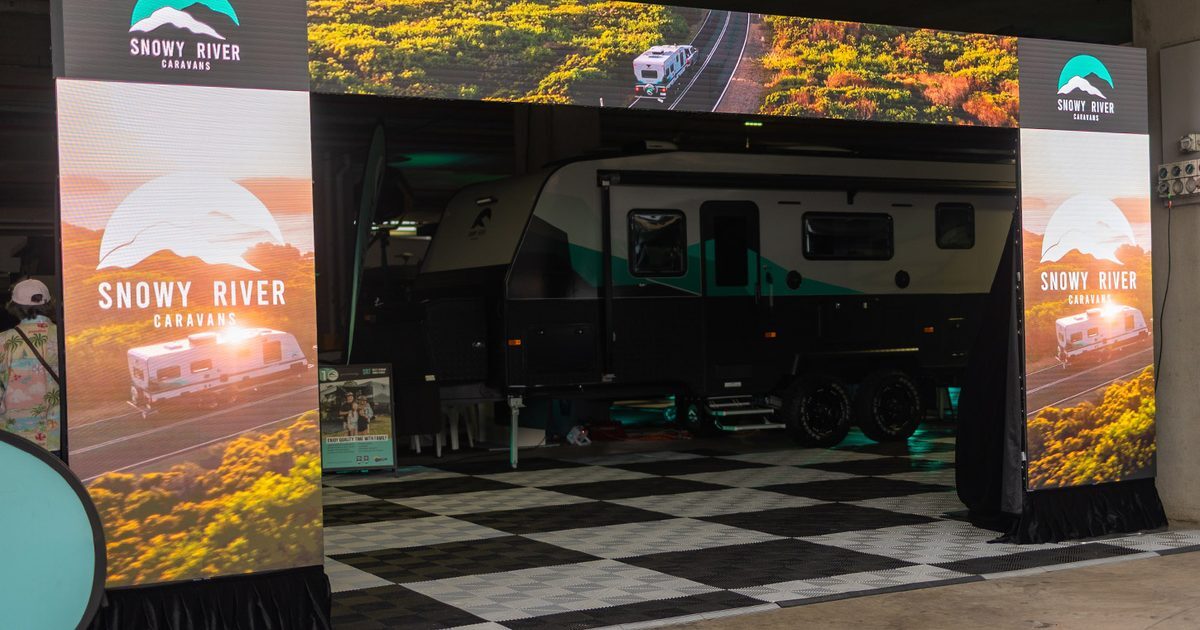
Product launches get oversold more than almost any other corporate event. Equipment lists balloon, "premium" gets added to lines that don't earn it, and budgets that should have delivered a sharp 90-minute reveal end up spent on scope nobody in the audience will notice.
Here's what 27 years of producing launch events across Brisbane teaches you: a great product launch needs three things done well (a bright clean screen, lighting in your brand colours, and clean audio for the presenter), one moment executed properly (the reveal), and an honest conversation about everything else. This guide unpacks both halves: what to invest in, and what to walk away from when someone tries to add it to the quote.
Key takeaways
- Product launch AV briefs are commonly oversold. Knowing what you actually need protects the budget.
- Three priorities matter: high-brightness LED screen, brand-accurate lighting, and clean presenter audio. In that order.
- The reveal moment is a built sequence (lighting, sound, screen content all timed to a single cue). It is where production earns its keep.
- Tech rehearsal with presenters before doors open is non-negotiable. The audience always notices when it's been skipped.
- Record the launch. The content is half its value once the doors close.
Why product launches get oversold
A few factors line up in this category. Marketing teams are briefing a high-stakes event under time pressure. Venue AV teams or suppliers often have an incentive to quote on the larger end. And the word "launch" tends to attract a vocabulary ("premium", "elevated", "wow factor") that doesn't translate into anything specific on the equipment list.
The result is briefs that grow without anyone deciding to grow them. The way to push back isn't to under-spec the event. It's to know what genuinely matters for a product launch so the conversation stays grounded.
What you actually need for a product launch
Three production elements do almost all the work for a launch. Get these right and you've built a sharp event. Get them wrong and no amount of additional scope will save it.
A high-brightness screen or LED wall
The screen behind your presenter is the visual centre of the launch. It carries the brand, the product imagery, the video content, and the reveal moment itself.
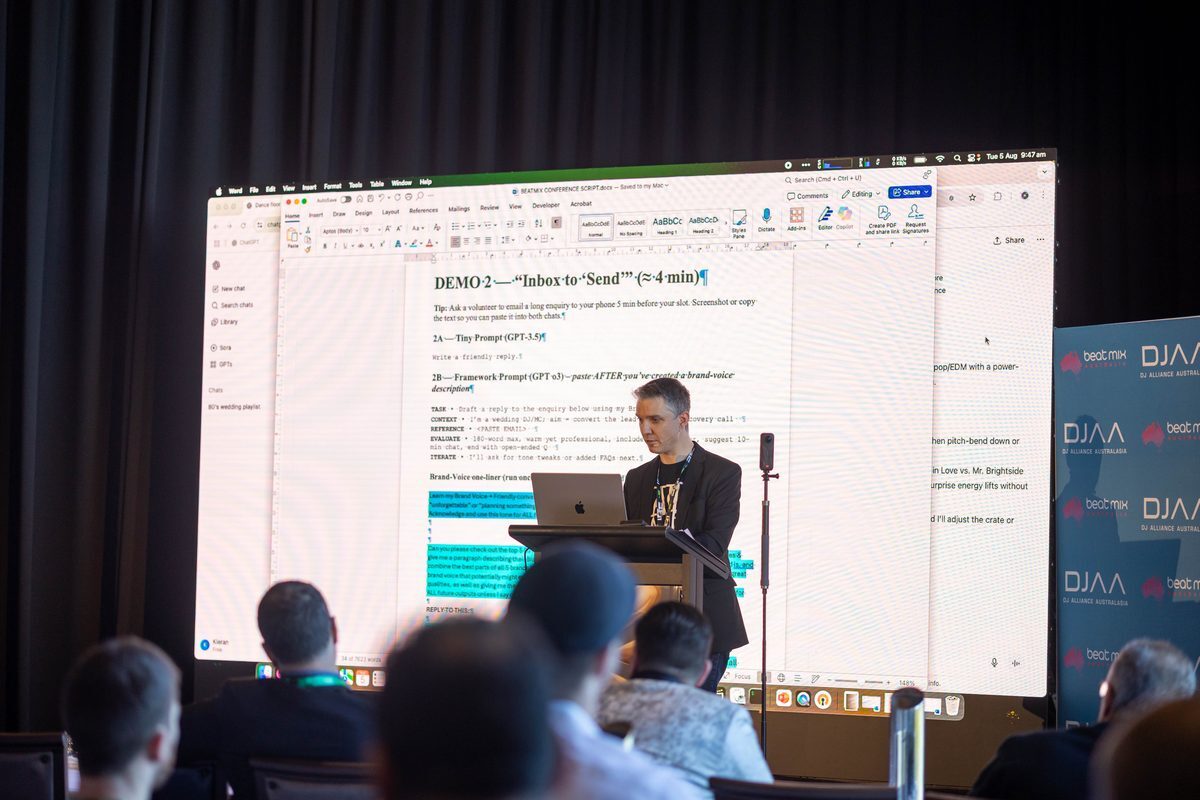
LED walls outperform projection at almost any product launch held in a lit room (which is most of them). LED stays crisp under stage lighting and room ambient, holds brand colours accurately, and looks clean in any video capture. Projection washes out, mutes colour, and dates the look of the event the moment guests walk in.
Size is a secondary question. A modest LED wall well-placed beats a larger projection setup almost every time. Our LED screens vs projection guide compares the two in more detail.
Brand-accurate colour wash lighting
Lighting is what makes a product launch room feel like your brand's room for the night. LED wash fixtures (lights that bathe a wall or stage in colour) can be set to your brand's exact colour values (the RGB or hex codes in your brand guide), which means the venue walls, the stage and the audience all sit inside your brand environment, not the venue's default look.
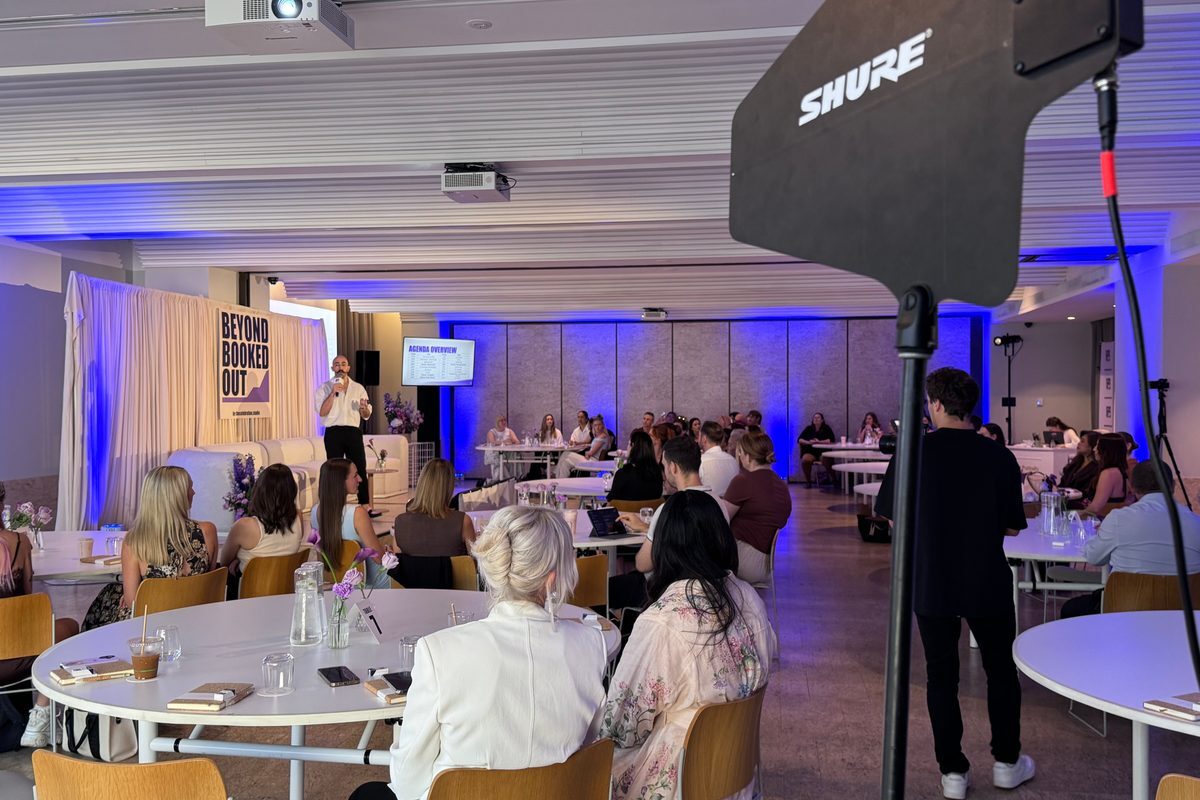
This is the single most cost-effective way to lift the look of a launch. A clean, brand-coloured room with a good screen reads more "premium" than a beige room with three times the budget on scenic (custom-built set pieces).
Clean, clear presenter audio
A product launch is a presenter-led event. If the audience can't hear the presenter clearly throughout the room, the entire launch is undermined regardless of how good the rest of the production looks.
Clean launch audio means speakers sized for the room (a line array, a tall stack of speakers that throws sound evenly to the back, for larger rooms), a wireless lapel mic for the presenter with handheld backup, and an audio tech mixing live. None of this is optional.
What sounds good but you can usually skip
Now the part most posts in this category won't write. Here's what regularly gets added to product launch briefs that you can almost always walk away from.
Elaborate set builds and scenic. For a 60- to 90-minute launch, a custom-built set is rarely the right investment. A clean stage with brand-coloured lighting and a strong LED wall delivers the same visual result for a fraction of the cost and bump-in time.
Multi-camera recording when a simpler setup will do. If you're livestreaming or want a polished highlight reel, multiple cameras are worth it. For a smaller launch that just needs the key moments captured, one or two cameras often cover it. Ask your supplier which fits what you'll do with the footage.
Excessive rigging. Some venues require rigging (hanging screens or lights from the ceiling) for vision and lighting. Many don't, or only for very specific brief scopes. Rigging quoted as standard for every launch is a flag worth questioning.
Atmospheric effects by default. Haze, low fog and cold spark effects (indoor firework fountains) can make a reveal look spectacular when the moment is designed around them. Added as a default, they can soften the screen image and pull focus from the product. Use them when they serve the reveal, not as a line item for its own sake.
None of these items are wrong in the right context. They're wrong as defaults.
How audience size changes the spec
A 50-person product launch and a 300-person launch share the same priority order (screen, lighting, audio) but the spec inside each category scales.
For 50 guests, a single well-placed LED wall, a clean colour-wash lighting plan, and a single wireless mic with quality PA speakers sized for the room covers it. One lead tech can usually run the day.
For 300 guests, the LED wall grows or doubles, IMAG screens (image magnification, live close-ups of the presenter) start to matter for the back of the room, the lighting plan extends to cover the wider audience area, and you'll need a small dedicated crew (audio, vision, lighting and a lead) rather than a single technician. The reveal moment also becomes more cue-heavy because you're holding a larger audience's attention.
The reveal moment: where the production earns its keep
Almost every product launch has a single moment the rest of the event is built around: the reveal. The product appears on screen, the lighting shifts, the audio lifts, the room reacts. When it's executed well, it's the moment everyone remembers. When it's clunky, the whole launch deflates.

A reveal moment is a built sequence, not a single click. A typical sequence might run:
- Lighting drops to a low blue or brand-coloured pre-state (the holding look before the cue).
- A sound design cue (a pre-built music or sound sting) starts under the presenter's last line.
- The screen content cuts at a precise count.
- The lighting jumps to a bright brand state in time with the screen.
- Audio lifts to full level.
- The presenter is back lit and centred for the audience reaction.
All of that happens inside two or three seconds. It works because someone has built the cue sequence and rehearsed it on the day with the full crew in the room. Without that rehearsal, the reveal happens but it doesn't land.
The tech rehearsal with presenters is non-negotiable
A product launch without a proper tech rehearsal almost always shows in the room. Presenter mic levels are off, slide advance timing is hesitant, the reveal cue doesn't land, transitions feel longer than they should.
A proper rehearsal walks the presenter through the full run on the stage they'll use, with all crew in position, before doors open. The presenter feels prepared. The crew has solved the small issues that always come up. The reveal sequence has been timed end to end.
When briefing a supplier, ask how much rehearsal time is built into the bump-in window (the setup time before doors open). If it's vague, push for specifics before signing.
Record the launch (or lose half its value)
A product launch is content. The 60 to 90 minutes in the room is the live event. The 12 months of social media cuts, internal comms distribution, sales enablement videos and highlight reels are the rest of its value.
For most launches, a clean recording setup (one or two cameras, a live audio feed, screen content captured separately) is enough to give marketing the assets to rebuild the moment in shorter formats. The cost of recording is small relative to what the content is worth to the brand after the event.
Product launch AV priority order (cheat sheet)
- Invest first in: a high-brightness LED screen sized for the room.
- Invest second in: brand-accurate colour wash lighting.
- Invest third in: clean audio sized for the room, with a wireless lapel mic for the presenter.
- Build properly: the reveal moment (lighting, sound, screen all cued together).
- Always include: a full tech rehearsal with presenters before doors open.
- Always include: recording for content repurposing.
- Question if quoted: elaborate set builds, more cameras than your footage plans need, default rigging, atmospheric effects without a specific reason.
Why an independent AV company gives better advice
When the supplier quoting your launch has no commercial arrangement with the venue, the advice you get is shaped by what your event actually needs. That includes telling you where to spend and, importantly, where not to. The "what sounds good but you can skip" list above isn't a list a venue-tied or upsell-incentivised supplier is naturally going to walk you through.
Independence isn't a feature. It's the reason the advice can be straight. Our corporate AV hire guide covers what to ask any supplier before you book.
Frequently asked questions
What AV do I actually need for a product launch?
Three priorities, in order: a high-brightness screen (LED outperforms projection for most launches), brand-accurate colour wash lighting, and clean presenter audio (speakers sized for the room, a wireless lapel mic and a live audio tech). Most launches don't need much beyond these three plus a properly built reveal moment.
How much does product launch AV cost in Brisbane?
It depends on audience size, room dimensions, reveal complexity and how much content you're recording. There's no honest flat figure. The more useful question is what's genuinely in the brief. Brief two or three suppliers with the same scope and compare what each is quoting, not just the price. Our guides to what's in a corporate AV quote and the real cost of corporate AV explain what moves the number.
Do I need to bring in production if the venue has AV?
Venue AV is usually scoped for conferences and standard functions. For a product launch with brand-colour lighting requirements, a reveal moment and presenter rehearsals, the venue brief almost always falls short. The brand-colour lighting alone usually goes beyond what an in-house system can deliver.
How do I get the reveal moment right at a product launch?
Treat the reveal as a built sequence rather than a single cue. Lighting, sound design and screen content all need to be timed together to land inside two or three seconds. Build the sequence with your supplier in advance, then rehearse it on the day with the full crew in position.
Can lighting match our brand colours exactly?
Yes. LED wash fixtures can be programmed to your brand's exact RGB or hex values. Provide your colour guidelines to the lighting designer in advance and the room can sit inside your brand environment for the full event.
Planning a product launch in Brisbane? Let's talk.
A great product launch isn't built on the longest equipment list. It's built on three things done well, one moment executed properly, and an honest conversation about everything else. The suppliers worth working with will have that conversation with you before quoting, not after.
If you're planning a product launch in Brisbane or anywhere across SEQ and want a straight conversation about what your AV brief should actually look like, we'd be happy to help. Share your venue, date and audience size and we'll come back with a scope built for the launch you're actually trying to deliver.